
Priority Area 5: Organizational Culture
Our Commitment
Championing a culture of safety, equity, and innovation remains our top priority. By modernizing facilities, aligning resources, and leading in the responsible use of AI, we strengthen the systems that allow every member of our school community to excel.
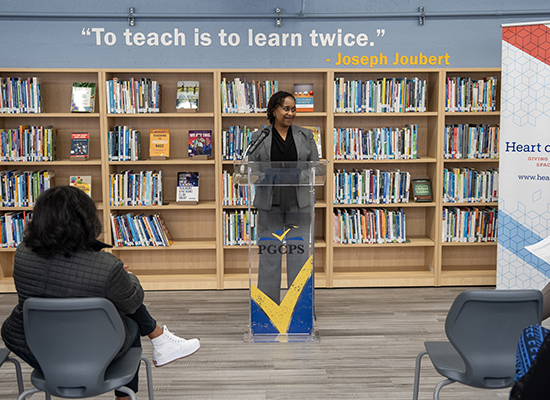
Support all stakeholders with clear systems that drive collaboration and performance.
A Unified Culture Drives Excellence
We're working hard to make sure everyone feels respected and trusted, and that we show up for our staff and students every day. We are building a culture where people feel valued, supported, and empowered to do their best work. A strong, unified culture lifts everyone and drives excellence across our entire system.
Focus Areas
Ensure Safety and Belonging: Promote a culture of physical, emotional, and psychological safety and belonging for all students and staff.
Maintain High-Quality Environments: Ensure clean, safe, and modern learning and working environments and a customer-centered culture that enhance teaching, learning, and staff performance.
Align Resources and Operations: Implement efficient operational practices and align the budget to directly support strategic priorities, thereby maximizing the impact on students.
Responsible AI Integration for Safe, Ethical, and Inclusive Learning Environments: Establish a culture of trust, responsibility, and transparency in AI use by promoting ethical practices, digital citizenship, and equitable access across schools and offices.
Strategies
5.1. Leverage PGCPS climate survey results to investigate root causes, drive districtwide actions, and provide schools with the data-driven support needed to implement targeted improvements.
5.2. Equip staff and leaders to honor diverse identities and experiences through continuous professional learning that ensures consistent actions to promote safety and belonging for all.
5.3. Leverage GPS tracking to improve on-time reliability for bus routes and improve stakeholder communication through increasing parent usage of the Chipmunk app and empowering schools to serve as an additional point of contact for family support.
5.4. Reduce the average age of open work orders by ensuring maximum staff capacity to fulfill maintenance obligations at PGCPS offices and school facilities, and prioritizing the completion of health and safety emergency requests before scheduling other long-term projects.
5.5. Enhance school safety by implementing security technologies, integrating modern physical security designs, and standardizing district-wide entry protocols.
5.6. Monitor implementation of a Multi-Tiered System of Support for students across all schools and provide tiered support and year-round, aligned professional learning to strengthen school-level practice.
5.7.Cultivate a transparent culture that outlines the equitable and safe use of AI among stakeholders.
Blueprint for Maryland’s Future: Pillars 2 & 5
Rationale for Focus AreasFocus Area: Ensure Safety and BelongingWhy is ensuring safety and belonging important? A positive organizational culture is built in learning environments where students and staff feel safe, respected, and connected. Student feedback indicates that many students do not consistently experience a strong sense of safety or belonging in their schools, and students report experiences related to bullying as an ongoing concern. These conditions have important implications for student engagement, attendance, and academic performance. Research shows that students who feel safe and connected to school are more likely to attend regularly, engage in learning, and achieve higher academically, while experiences of bullying and peer conflict are associated with lower achievement and increased absenteeism (Centers for Disease Control and Prevention, 2023; National Center for Education Statistics, 2023). Students expressed the importance of clear, consistently applied expectations for behavior that are grounded in respect and fairness. Staff similarly noted the importance of safe, supportive environments that foster positive relationships and consistent, district-wide behavior expectations that protect instructional time. These perspectives reinforce the need to strengthen school climate by using feedback data to better identify and address underlying causes of student-reported concerns, while ensuring every school promotes a culture where students and staff feel safe, valued, and included. Focus Area: Maintain High-Quality EnvironmentsWhy is maintaining high-quality environments important? High-quality physical environments are closely tied to conditions for effective teaching and learning. Staff feedback points to the importance of equitable access to instructional materials, reliable technology, and safe, well-maintained facilities, along with working conditions that support morale and retention. Families also identified clean and well-maintained schools as a key factor in creating positive learning environments. Research indicates that school facility quality is associated with student achievement, attendance, and teacher retention, with stronger outcomes in environments that are safe, clean, and well-resourced (U.S. Department of Education, 2021; Filardo et al., 2019). High-quality environments contribute to stronger school pride, improved working conditions, and more effective experiences for students, staff, and the broader school community. Focus Area: Align Resources and OperationsWhy is aligning resources and operations important? Effective resource alignment is essential to ensuring that schools have what they need to support student success. Stakeholder feedback indicates concerns about consistency and equity in how resources are distributed across schools, along with perceptions that access to resources varies across the system. These trends highlight the importance of strengthening alignment between operational decisions and school needs. Research in education finance consistently shows that equitable and strategic allocation of resources is associated with improved student outcomes, particularly for students who require additional academic and behavioral supports (Baker, 2018; U.S. Department of Education, 2022). Families and staff emphasized the importance of transparency in decisions related to allocation of resources and student supports, including the need for operational systems that are responsive, efficient, and clearly aligned to instructional priorities. Strengthening transportation reliability and communication systems is also central to this work, ensuring families have timely, accurate information and students can access school consistently. Focus Area: Responsible AI Integration for Safe, Ethical, and Inclusive Learning EnvironmentsWhy is responsible AI integration important? As technology continues to evolve, schools are increasingly expected to integrate artificial intelligence in ways that are ethical, transparent, and supportive of learning. Staff, students, and families express a shared expectation that AI should be implemented thoughtfully to prepare students for the future while maintaining safety, equity, and trust in educational environments. Emerging research suggests that when implemented with clear guidance and safeguards, AI tools can support personalized learning, instructional planning, and efficiency, but also require strong guardrails to address concerns related to privacy, bias, and appropriate use in schools (U.S. Department of Education, Office of Educational Technology, 2023; UNESCO, 2023). |
Key Performance Indicators (KPIs)
- Percentage of instructional staff agreeing that they are equipped to deliver culturally responsive instruction in the classroom.
- Percentage of instructional staff agreeing that they are confident in their ability to incorporate social-emotional learning strategies into classroom instruction.
- Percentage of stakeholders agreeing that [they/their child] feel safe at school/work.
- Percentage of stakeholders agreeing that [they/their child] feel a sense of belonging at school/work.
- Percentage of stakeholders agreeing that bullying is a problem at [their/their child’s] school.
- Percentage of students who receive at least one in-school or out-of-school suspension for each student group*.
- Percentage of stakeholders agreeing that their school/building is clean and well-maintained.
- Percentage of staff agreeing that there is a culture of respect and professionalism in the workplace.
- Average days aged for work orders.
- Correlation of per-pupil funding by the school-to-school performance as measured by points earned on the MSDE School Report Card.
- Percentage of stakeholders agreeing that their school has classroom environments that support student learning (e.g., size, temperature, lighting).
- Percentage of parents/guardians agreeing that PGCPS provides high-quality (e.g., timely, courteous, professional) customer service when responding to questions, concerns, and requests.
- Percentage of staff agreeing that district offices provide high-quality (e.g., timely, courteous, professional) customer service when responding to internal inquiries, concerns, and requests.
- Percentage of bus routes with on-time arrivals.
- Percentage of staff agreeing that they have equitable access to AI tools.
- Percentage of stakeholders indicating they understand expectations for the safe, responsible, and ethical use of AI in [their/their child’s] daily work.
* KPI results will be disaggregated by student group in the reporting.