
Priority Area 3: Expanding Access to Programs
Our Commitment
Unlocking the potential of every student begins with expanding access to rigorous programs. By removing barriers and heightening participation in advanced coursework, we ensure every learner has the social-emotional supports and resources they need to succeed.
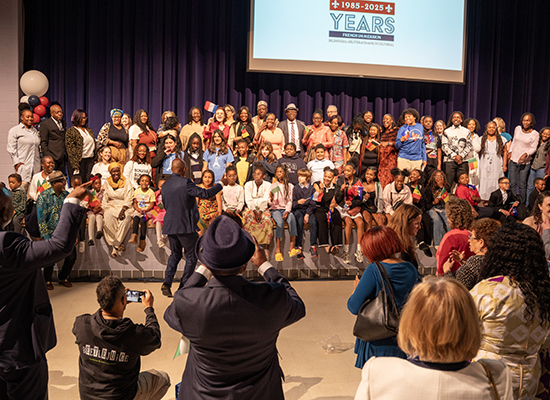
Provide students with access to programs and resources that support learning and career readiness.
Opening More Doors for Every Student
We are creating more pathways, more choices, and more support so each student can discover who they are and who they want to become. This means greater access to strong academics, meaningful programs, and real-world experiences that prepare students for what comes next. it means removing barriers and making sure every student can fully participate, belong, and succeed.
Focus Areas
Expand Access to Advanced Coursework: Increase access to advanced coursework, AI programs, and robust post-secondary pathways for all students.
Ensure Universal Student Well-being: Provide accessible and inclusive resources that address the diverse physical and mental health needs of all students.
Strategies
3.1. Expand awareness and equitable access to Talented and Gifted, College and Career Readiness Pathways, and opportunities to earn an IRC through coordinated outreach and engagement with students, families, staff, and community partners, with a focus on increasing the participation of historically underrepresented groups, including Hispanic/Latino students.
3.2. Expand equitable access to industry recognized credentials (IRC) and rigorous coursework by implementing multiple measures to identify student readiness.
3.3. Strengthen oversight and targeted support to ensure equitable, data-informed decision-making related to the identification, disciplinary removal, and placement of students with disabilities.
3.4. Implement a comprehensive, school-centered approach to student well-being by strengthening Multi-Tiered Systems of Support practices, expanding professional learning, and ensuring the consistent implementation of existing student support
3.5. Standardize and institutionalize Student Support Teams across all schools by establishing clear district expectations, building leadership capacity, and embedding accountability measures to ensure consistent, high-quality identification and support for students’ academic, behavioral, and social-emotional needs.
Blueprint for Maryland's Future: Pillars 3 & 4
Rationale for Focus AreasFocus Area: Expand Access to Advanced CourseworkWhy is expanding access to advanced coursework important? Access to rigorous academic pathways plays a critical role in preparing students for college, careers, and future opportunities. PGCPS has been focusing on expanding and strengthening advanced learning options, including Advanced Placement (AP), gifted and talented programs, dual enrollment, and career pathways aligned to post-secondary readiness. Current participation data indicate that only about 10 percent of students take Advanced Placement (AP) exams, with lower participation among students with disabilities and multilingual learners. In addition, about 10 percent of students are enrolled in gifted and talented programs, suggesting an opportunity to broaden access so more students can benefit from advanced academic experiences. National research shows that participation in rigorous coursework such as AP and dual enrollment is associated with higher rates of college enrollment, persistence, and completion (College Board, 2023; Conley, 2014). Additional studies point to the importance of clear identification practices, early exposure to advanced learning, and intentional support structures that help a wider range of students successfully participate in accelerated programs (Conley, 2014; Advance CTE, 2023). Feedback from students and families reflected strong interest in expanding access to challenging coursework, sustaining strong existing programs, and ensuring clear academic pathways that prepare students for success beyond high school. These perspectives reinforce the importance of broadening participation in advanced opportunities, having multiple pathways to college and career readiness, and maintaining high expectations while ensuring students have the supports needed to succeed in rigorous learning environments. Focus Area: Ensure Universal Student Well-beingWhy is ensuring universal student well-being important? Student success is strengthened when schools provide supportive environments where students feel safe, connected, and ready to learn. Students benefit most when their well-being is supported alongside strong academic instruction, with access to resources that help them thrive socially, emotionally, and academically. Research indicates that comprehensive school-based supports for mental, emotional, and behavioral health are associated with improved student engagement, attendance, and academic outcomes (National Academies of Sciences, Engineering, and Medicine, 2019; American Educational Research Association, 2020). In addition, PGCPS students expressed the importance of positive school environments where relationships are strong, expectations are clear, and classrooms are grounded in fairness and respect. Staff survey input reinforces the need for consistent expectations across schools, paired with strong systems of academic, behavioral, and social-emotional supports that help students succeed. Strengthening access to resources that support well-being will better ensure students are supported, engaged, and prepared to fully access learning opportunities. |
Key Performance Indicators (KPIs)
- Percentage of students in Grades 8–12 enrolled in at least one advanced course (honors, AP, IB, Dual Enrollment).
- Percentage of high school students who are earning an industry recognized credential.
- Percentage of students with disabilities, multilingual learners, and economically disadvantaged students identified as Talented and Gifted (TAG).
- Percentage of students with disabilities placed in Least Restrictive Environment (LRE) settings A and B, while reducing placements in LRE C for each race/ethnicity group and by disability identification category.
- Percentage of schools with disproportionate identification and disciplinary removal for students with disabilities.
- Percentage of schools that have two or more full-time equivalent (FTE) positions for student support professionals (e.g., school counselors, social workers, school psychologists, student personnel workers, mental health professionals, career counselors, behavioral interventionists, etc.).